
Why Oman Is Attracting Foreign Investment
Oman sits outside the Strait of Hormuz at the junction of Asia, Africa, and the Middle East. That geography gives it a strategic position that other Gulf markets don't share, and the government has been building on it deliberately since launching Vision 2040 — a long-term economic diversification plan that explicitly targets foreign investment in tourism, manufacturing, logistics, and extractives.
Until 2020, a mandatory Omani shareholding requirement kept most international investors out of the mainland. That restriction is largely gone. Since the Foreign Capital Investment Law (Royal Decree 50/2019) came into effect, 100% foreign ownership has been available in most commercial and industrial sectors. There is no personal income tax. Oman holds double taxation treaties with more than 30 countries. And unlike its Gulf neighbors, Oman has a reputation for political neutrality and stability that makes it an unusually predictable operating environment.
This guide covers the opportunity sectors, available business structures, the general setup process, and the cultural dynamics you'll need to understand to operate effectively on the ground.
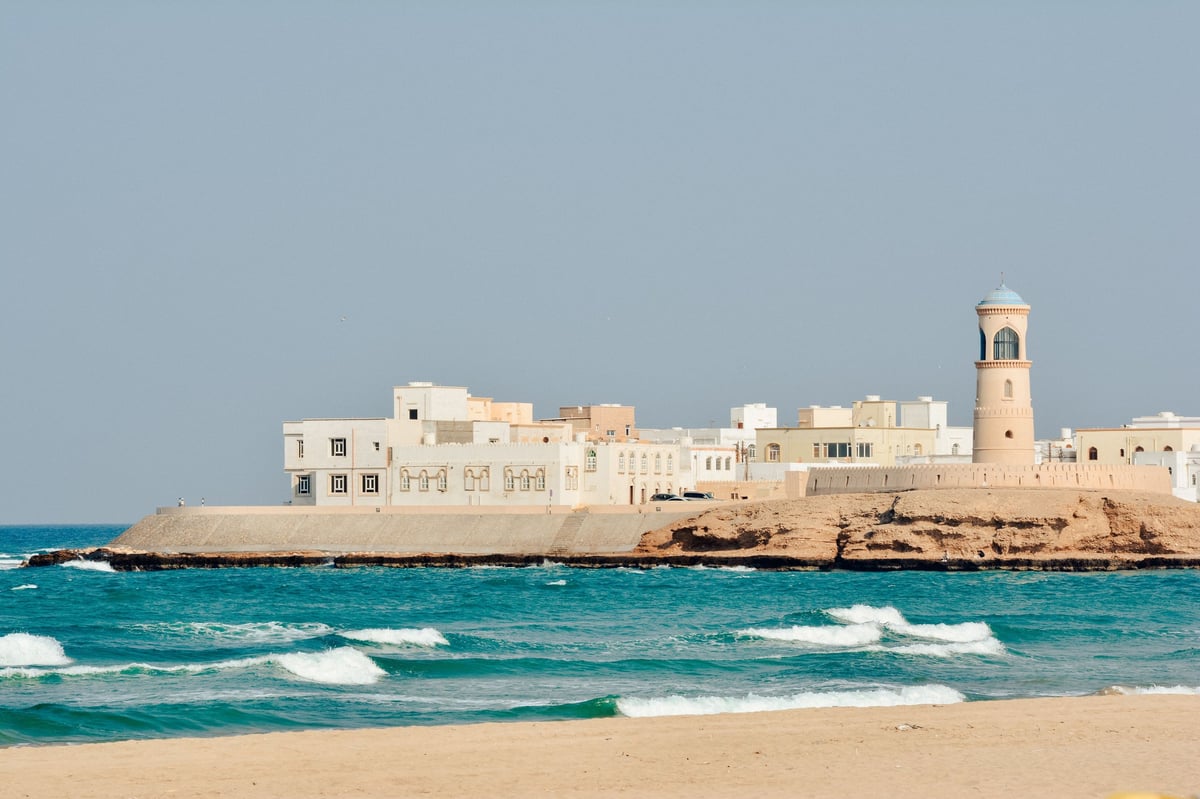
Coastal lighthouse and historic fortification, Sur, Oman
Where the Opportunities Are
Tourism
Oman's natural landscape is genuinely distinctive — mountain wadis, UNESCO-listed ancient cities, thousands of kilometers of largely undeveloped coastline, and a cultural heritage that has no equivalent elsewhere in the Gulf. The government is actively developing this into a tourism economy. The Eleventh Five-Year Development Plan (2026–2030) identifies tourism as one of two explicit priority sectors for private investment and job creation. Several major hospitality and eco-tourism projects are currently under development or opening in 2026.
For foreign investors, tourism is one of the more accessible mainland sectors. Hotel development, eco-tourism facilities, hospitality management, transport services, and tour operations are all open to full foreign ownership.
Logistics and Trade
Oman's ports — Sohar, Salalah, and Duqm — sit on major Indian Ocean shipping routes without Hormuz exposure. Salalah is already one of the larger transshipment ports in the region. Hafeet Rail, a freight corridor connecting Sohar Port to the UAE's Etihad Rail network, will add direct overland GCC connectivity when complete.
Oman is positioning itself as a logistics hub for trade between Asia, East Africa, and the Middle East. Warehousing, freight forwarding, cold chain logistics, and port-adjacent manufacturing are natural fits, particularly in the free zones where customs arrangements are favorable.
Manufacturing
Manufacturing is the second priority sector in Oman's current development plan. Industrial cities managed by Madayn support a range of operations — food processing, metal and steel, chemical production, and light assembly — across multiple locations. Free zone setups offer significant tax incentives for qualifying industrial projects, and labor costs are competitive relative to the UAE.
Mining
Oman's mountain range hosts commercially significant deposits of copper, gold, chromite, and industrial minerals. The country was historically known as Majan — the ancient land of copper — and Vision 2040 sets an explicit target of growing mining's share of GDP significantly by 2040. The government is actively seeking foreign technical expertise and capital to develop these resources.
Mining requires approvals from the Ministry of Energy and Minerals beyond standard commercial registration, and concession terms vary by project. It is not a simple entry sector, but the government's stated intent is a meaningful signal for investors with the right technical background.
Green Energy
Oman has serious green hydrogen ambitions. The state-backed Hydrom initiative is developing export-scale production facilities in the Duqm Special Economic Zone, and the government is targeting Oman as a global exporter of green hydrogen over the coming decade. Solar and wind capacity is also expanding. For energy investors with technical depth, Oman is actively competing for foreign expertise and has structured its concession frameworks to attract it.

Mining quarry in the Al Hajar Mountains, Oman
Business Structures
Limited Liability Company (LLC)
The standard structure for most foreign investors entering the mainland. An LLC can have between two and forty shareholders, limits personal liability to capital contributions, and allows 100% foreign ownership in most approved activities. It gives you direct access to the local Omani market — you can trade with domestic clients, bid on government contracts, and operate across the country without restriction.
One important detail: Oman classifies companies by grade based on declared capital. The grade your company holds determines what size of government contracts it can compete for. If public sector business is part of your plan, set the capital at the right level from the start rather than restructuring later.
Single Person Company (SPC)
Structurally similar to an LLC but designed for a single shareholder. Introduced in 2019, it has become popular with sole foreign founders who don't have a co-investor. The setup process is slightly simpler, and it can be converted to an LLC later if the ownership structure changes.
Free Zone Company
Oman's three main free zones — Duqm Special Economic Zone, Sohar Port and Freezone, and Salalah Free Zone — all offer 100% foreign ownership, corporate tax holidays ranging from ten to thirty years depending on the zone and activity type, customs exemptions, and lower Omanisation requirements than the mainland.
The constraint is the same as any GCC free zone: you cannot sell directly into the Omani domestic market without appointing a local distributor or registering a separate mainland entity. Free zone structures suit investors whose revenue is primarily export-oriented or international. If your customers are Omani businesses or consumers, you need a mainland LLC.
Branch of a Foreign Company
Foreign companies can establish an Omani branch under the parent entity's name. Branches must operate within the same activity scope as the parent and require additional government approvals. Most investors building new Oman operations choose an LLC over a branch, but a branch can make sense where maintaining a single international legal identity matters for client or contractual reasons.

Traditional souk in Oman
The Setup Process
Company registration in Oman runs through the Ministry of Commerce, Industry and Investment Promotion (MOCIIP) via the Invest Easy portal. The process has become significantly more digital in recent years, and standard applications for a mainland LLC or SPC typically complete within two to four weeks once documents are in order.
The steps at a high level: reserve your company name, prepare and notarise the founding documents, register for a Commercial Registration certificate, join the Oman Chamber of Commerce and Industry, secure any sector-specific licences that apply to your activity, register with the Oman Tax Authority, and open a corporate bank account.
A few things worth flagging before you start:
Check the Negative List First
MOCIIP maintains a list of activities restricted to Omani nationals. It includes some categories that might seem like general commerce — domestic recruitment, fueling stations, vehicle repair, and traditional Omani product manufacturing. Confirm your exact business activity codes are open to foreign ownership before proceeding.
Omanisation Is Enforced, Not Advisory
Mainland companies are required to meet workforce Omanisation targets — the proportion of Omani nationals in your headcount — set by the Ministry of Labour. These vary by sector. Under regulations introduced in 2025, fully foreign-owned companies must employ at least one Omani national within the first year of operation regardless of company size or structure. Free zones carry lower Omanisation requirements. Factor this into your hiring plan before formation, not after.
Withholding Tax on Profit Repatriation
A 10% withholding tax applies to dividends paid to non-resident shareholders. GCC nationals are exempt. If you are investing from outside the GCC, check whether Oman has a double taxation treaty with your home country before finalising your corporate structure.
Tax Basics
Corporate income tax on the mainland is a flat 15%. Oman levies 5% VAT on most goods and services, with mandatory registration required once annual turnover exceeds the threshold set by the Oman Tax Authority. Free zone companies are generally exempt from corporate tax for the duration of their applicable holiday, but VAT obligations still apply once turnover reaches the registration threshold.
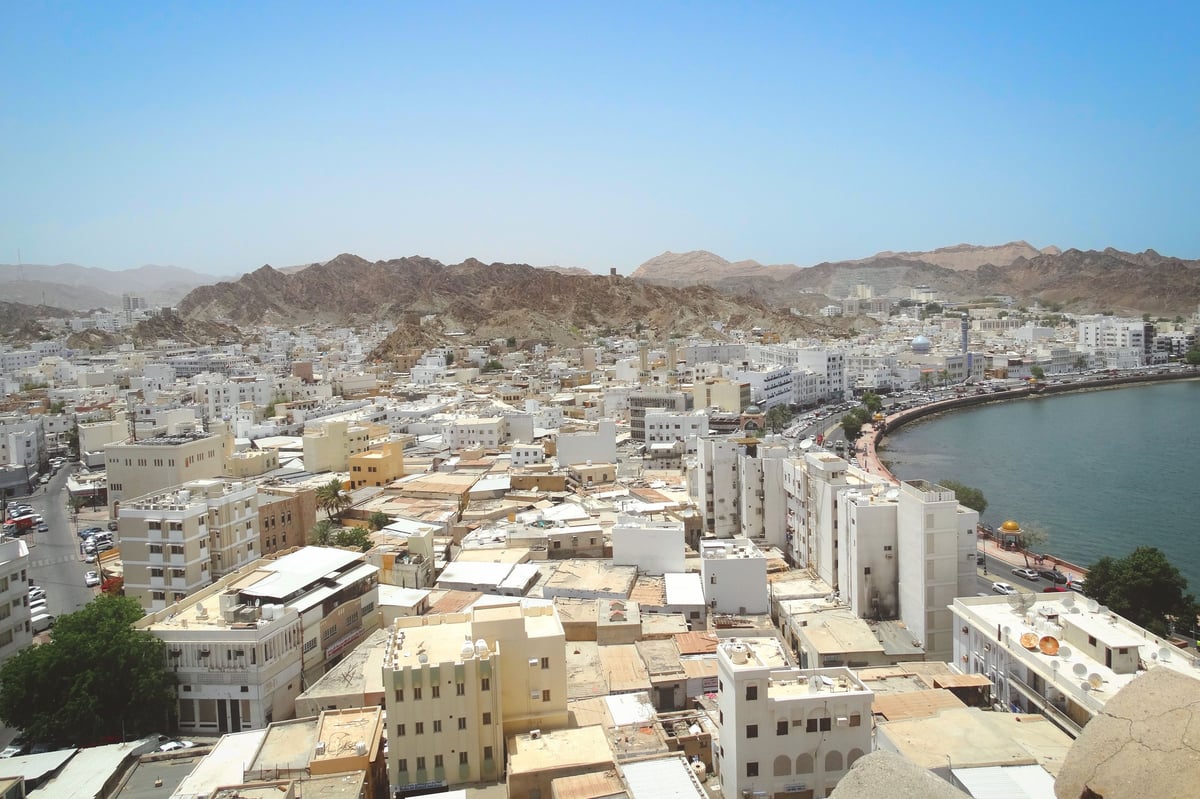
Muscat waterfront and old town, Muscat, Oman
Cultural Considerations
Oman has a distinct business culture, and it differs from the UAE in ways that matter operationally.
Relationships Come Before Transactions
Business in Oman is built on personal trust. Foreign investors who show up expecting to close arrangements quickly typically run into resistance — not hostility, but the Omani approach to doing business involves building genuine familiarity before committing. Expect more initial meetings than you would in a purely transactional environment, and treat them as investment rather than delay.
Patience with Process Is Expected
Government approvals, banking relationships, and regulatory interactions move at a deliberate pace. Applying pressure — which works in some markets — is counterproductive in Oman. A local advisor or established PRO service with existing government relationships is not optional for investors who want timelines to stay manageable.
Arabic Is the Official Language; English Is Widely Used in Business
Most government portals and documentation are bilingual, and English fluency is common in business and professional settings. However, formal communications with government entities should be in Arabic, and any legal documents submitted for registration must be in Arabic or accompanied by a certified translation.
Hierarchy and Titles Are Observed
In meetings, address senior counterparts by title. Decisions are typically made by principals, not delegated to junior staff, so ensure you are engaging at the right level from the start.
The Working Week and Ramadan
The standard working week in Oman is Sunday through Thursday. During Ramadan, business hours shorten significantly across both public and private sectors. This affects government processing times, meeting availability, and contractor timelines. Schedule around it.
Oman's Neutrality Is an Asset
One distinctive aspect of operating in Oman is the country's reputation for political non-alignment. Oman has maintained diplomatic relationships with parties that are in conflict elsewhere in the region. For investors operating across multiple GCC markets or with counterparties in Iran, India, or East Africa, Oman's neutral positioning is a practical advantage — it rarely creates the relationship complications that can arise when operating through more politically exposed GCC hubs.
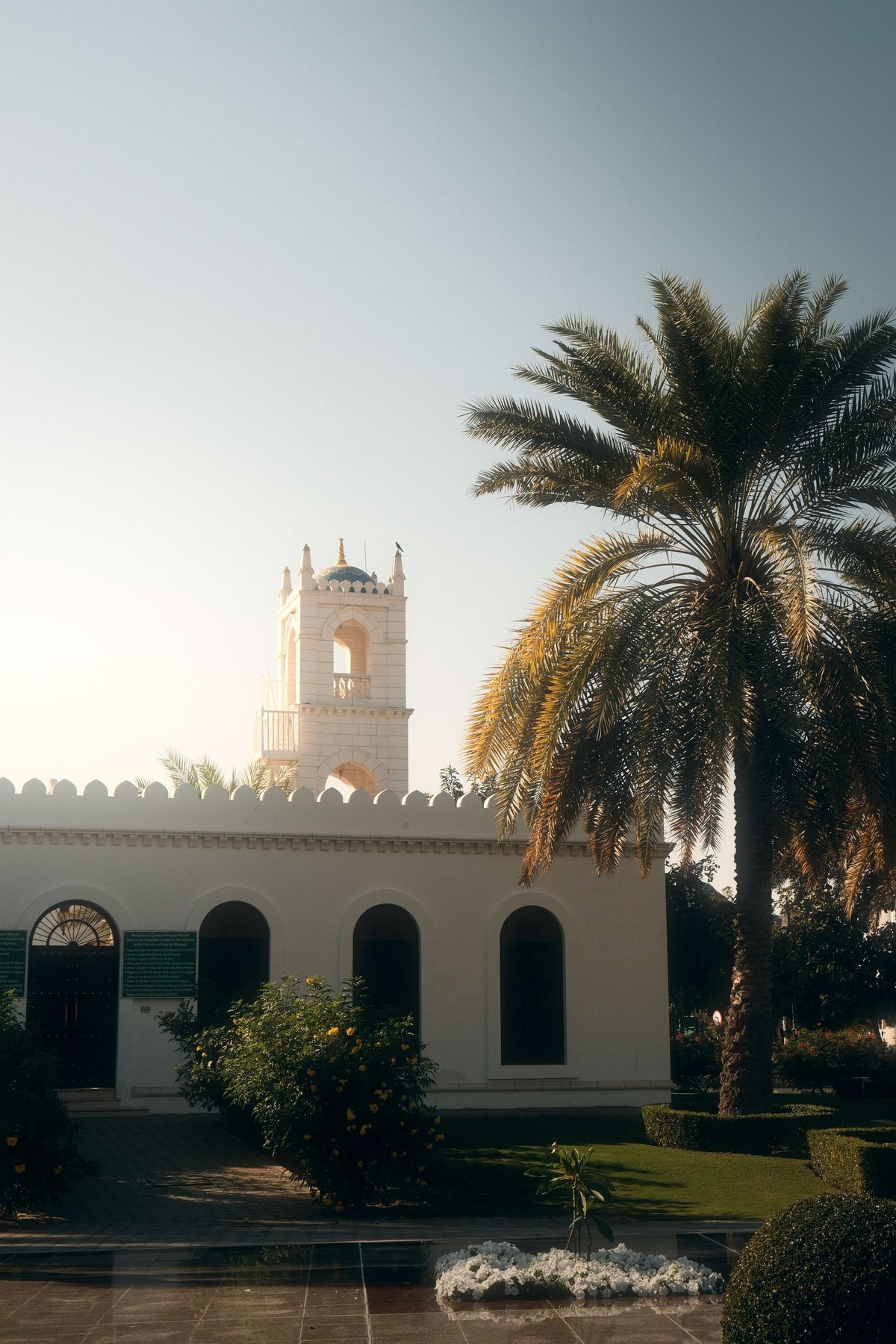
Traditional mosque, Oman
Getting Started
Oman is a well-structured investment environment that is not yet crowded. The legal framework is clear, the government's sectoral priorities are specific, and the free zone incentives are competitive for manufacturing and logistics investors who qualify.
What slows investors down is not the regulatory framework itself — it is underestimating Omanisation requirements, failing to model withholding tax into returns, and starting the process without relationships on the ground.
Veridian Global Partners works with investors entering Oman and the wider GCC on entity structure, sector clearance, tax positioning, and banking setup. If you're evaluating Oman as a standalone market or as part of a broader GCC strategy, get in touch before committing to a formation path.
Get In Touch
Contact Us
Article Written By
Martin Kocher
Managing Partner, Veridian Global Partners